

1. What Is a Fake Name Generator?
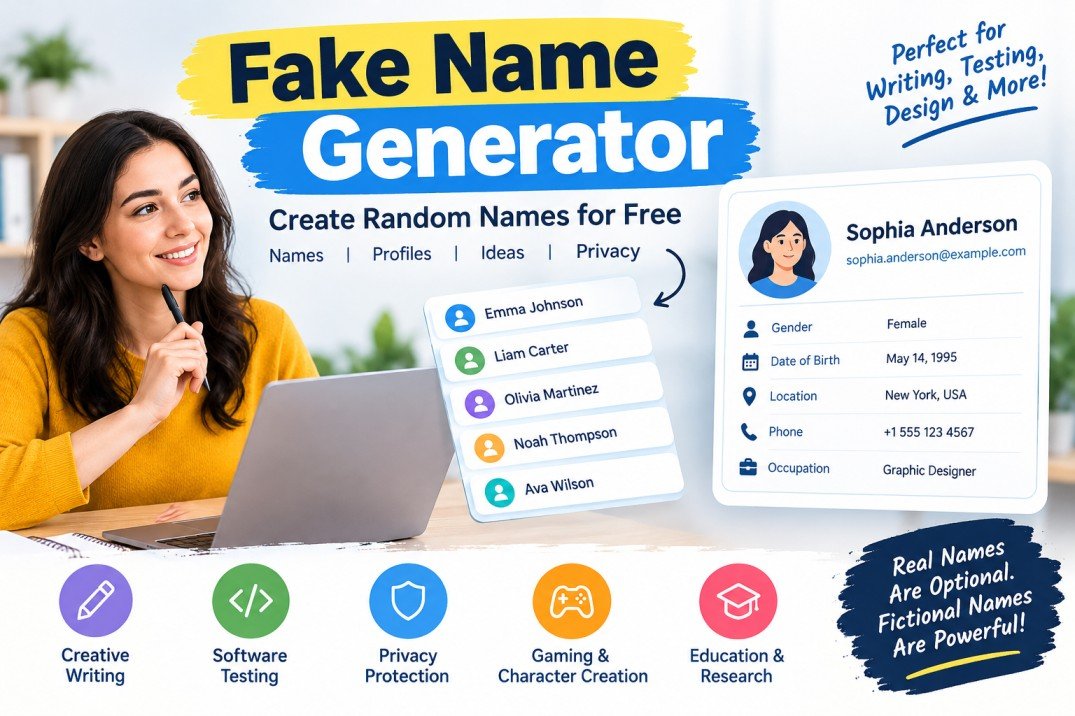
A fake name generator is an online tool that creates fictional names for different purposes. Depending on the tool, users can generate first names, last names, full names, usernames, and even fictional identities. These tools are useful for writers, developers, students, gamers, and anyone who needs realistic placeholder information without inventing every detail manually.
Most fake name generators allow users to choose preferences such as gender, language, country, or naming style. Some advanced tools also provide fictional addresses, phone numbers, birth dates, and other sample details. The generated information can make creative projects and software demonstrations feel more realistic while helping users avoid exposing personal information unnecessarily.
- Generate random full names
- Choose different naming styles
- Explore international names
- Create fictional character identities
- Produce sample usernames
- Support software testing
- Develop story characters
- Protect personal details in demonstrations
2. How Does a Fake Name Generator Work?
A fake name generator typically combines name databases, predefined word lists, and random selection algorithms to produce names. Some tools use regional naming conventions to create combinations that resemble names from particular countries or cultures. The quality of the results depends on the database, available settings, and the generator’s method of combining names.
Using one is usually straightforward. You select your preferences, click a generate button, and receive one or more fictional names. Certain websites provide additional options for customizing the results, while others generate names instantly without requiring registration. Always review the output because a randomly generated name may coincidentally belong to a real person.
- Select a preferred country
- Choose a gender option
- Pick a language or region
- Click the generate button
- Review the suggested names
- Generate alternative results
- Copy a suitable name
- Use the result appropriately
3. Key Features of a Fake Name Generator
The best fake name generator offers more than a simple list of random names. Depending on the website, features may include regional name selection, multiple results, customizable formats, and options for generating fictional profile details. These capabilities help users find names that fit a particular project instead of relying on generic or repetitive suggestions.
Some tools also support bulk generation, allowing users to create numerous sample names for spreadsheets, database testing, or mock applications. Other generators focus on creative naming, offering unusual combinations for fantasy stories, role-playing games, and fictional characters. Before choosing a tool, check which features are available and whether its privacy policy meets your needs.
- Random first and last names
- Country-specific name options
- Multiple results in one session
- Customizable gender preferences
- Fictional username suggestions
- Bulk name generation
- Simple copy-and-paste functionality
- Optional sample profile information
4. Benefits of Using a Fake Name Generator
One major benefit of a fake name generator is convenience. Instead of spending time brainstorming names, users can produce several options within seconds. This makes the tool particularly helpful for writers working on large casts of characters, teachers preparing classroom exercises, and developers creating realistic sample records for software demonstrations.
Another benefit is the ability to separate fictional examples from real personal information. When creating a presentation, prototype, or training document, sample names can reduce unnecessary exposure of actual customer or employee details. However, a generated name alone does not guarantee anonymity, especially when it is combined with identifying information copied from real people.
- Save time during brainstorming
- Create realistic sample records
- Support creative writing projects
- Build fictional gaming characters
- Simplify classroom activities
- Populate software test environments
- Reduce exposure of real names
- Generate multiple naming ideas quickly
5. Common Uses of a Fake Name Generator
A fake name generator serves many purposes across creative, educational, and technical fields. Authors use it to develop characters, while game designers use it to populate fictional worlds. Teachers may generate sample names for exercises, and designers can use fictional identities when building website mockups or demonstrating new application features.
Businesses and software developers may also need sample names when testing registration forms, customer databases, or reporting systems. In these situations, generated names can make test environments easier to understand. However, names should be paired with clearly fictional or reserved test data, and testing should take place in controlled environments rather than using invented identities to mislead real services.
- Writing novels and short stories
- Creating role-playing game characters
- Testing registration forms
- Demonstrating website designs
- Building sample customer databases
- Preparing educational worksheets
- Creating fictional business examples
- Designing prototypes and mockups
6. Fake Name Generator for Privacy and Online Safety
A fake name generator can help limit the use of personal information in low-risk situations, such as public demonstrations, fictional profiles, or practice projects. Using a fictional name in a sample document may prevent your actual name from appearing unnecessarily. Nevertheless, a generated name does not replace proper privacy controls or make every online activity anonymous.
Before using a generator, review its privacy policy and avoid entering sensitive personal details. Some websites may collect technical information, use advertising cookies, or store user activity. Remember that websites, payment providers, and online services may require accurate identity information for legitimate reasons. Never use fictional identities to commit fraud, impersonate another person, evade legal requirements, or bypass identity verification.
- Avoid sharing sensitive personal details
- Check the website’s privacy policy
- Use fictional data in demonstrations
- Keep test accounts separate
- Avoid copying real people’s identities
- Do not enter passwords into generators
- Follow platform identity requirements
- Use secure testing environments
7. How to Choose the Best Fake Name Generator
Choosing the right fake name generator depends on your intended use. If you are writing a novel, you may prefer a tool with international names and regional variations. Developers may need bulk generation and downloadable sample data, while casual users might prioritize a simple interface, fast results, and easy copying.
Accuracy, usability, privacy, and customization are important factors to compare. A useful generator should clearly explain its features and avoid making misleading promises about anonymity. If you need sample data for a professional project, check whether the tool provides appropriate licensing information and whether its output can be used in your intended environment.
- Look for a user-friendly interface
- Compare available customization options
- Check regional naming support
- Review privacy and data practices
- Consider bulk generation features
- Verify export options when needed
- Avoid suspicious downloads and pop-ups
- Match the tool to your project
8. Frequently Asked Questions About Fake Name Generators
Many beginners wonder whether fake name generators are free, safe, or suitable for professional projects. The answer depends on the website and the way you use its results. Many generators offer basic features at no cost, although some may restrict advanced customization or bulk generation to paid plans. Always check the site’s current terms before relying on it.
Another common question concerns whether generated names belong to real people. Because many names follow familiar naming patterns, accidental matches are possible. A fictional name should therefore not be treated as proof that an identity does not exist. For sensitive applications, use clearly designated test records and validate the data before introducing it into a production system.
- Is a fake name generator free? Many tools offer free basic name generation.
- Can I use generated names in stories? Yes, fictional names are useful for creative writing.
- Are generated names always unique? No, names may match real people’s names.
- Can developers use these tools? Yes, for appropriate testing and demonstration purposes.
- Can I generate names from other countries? Some tools support multiple countries and regions.
- Does a fake name guarantee anonymity? No, other identifying details can still reveal your identity.
- Do I need to create an account? Many basic generators work without registration.
- Can I use fake details on every website? No, follow the service’s identity requirements and applicable laws.
Conclusion
A fake name generator is a practical tool for creating fictional names quickly and conveniently. Whether you are writing a story, designing a game, preparing educational materials, or testing software, it can help you develop realistic examples without manually brainstorming every name. For the best results, choose a generator that matches your needs, review its privacy practices, and use the generated information responsibly. Treat fictional identities as creative or testing resources rather than a way to mislead others. With the right approach, a fake name generator can make creative work and development projects more efficient, organized, and privacy-conscious.