

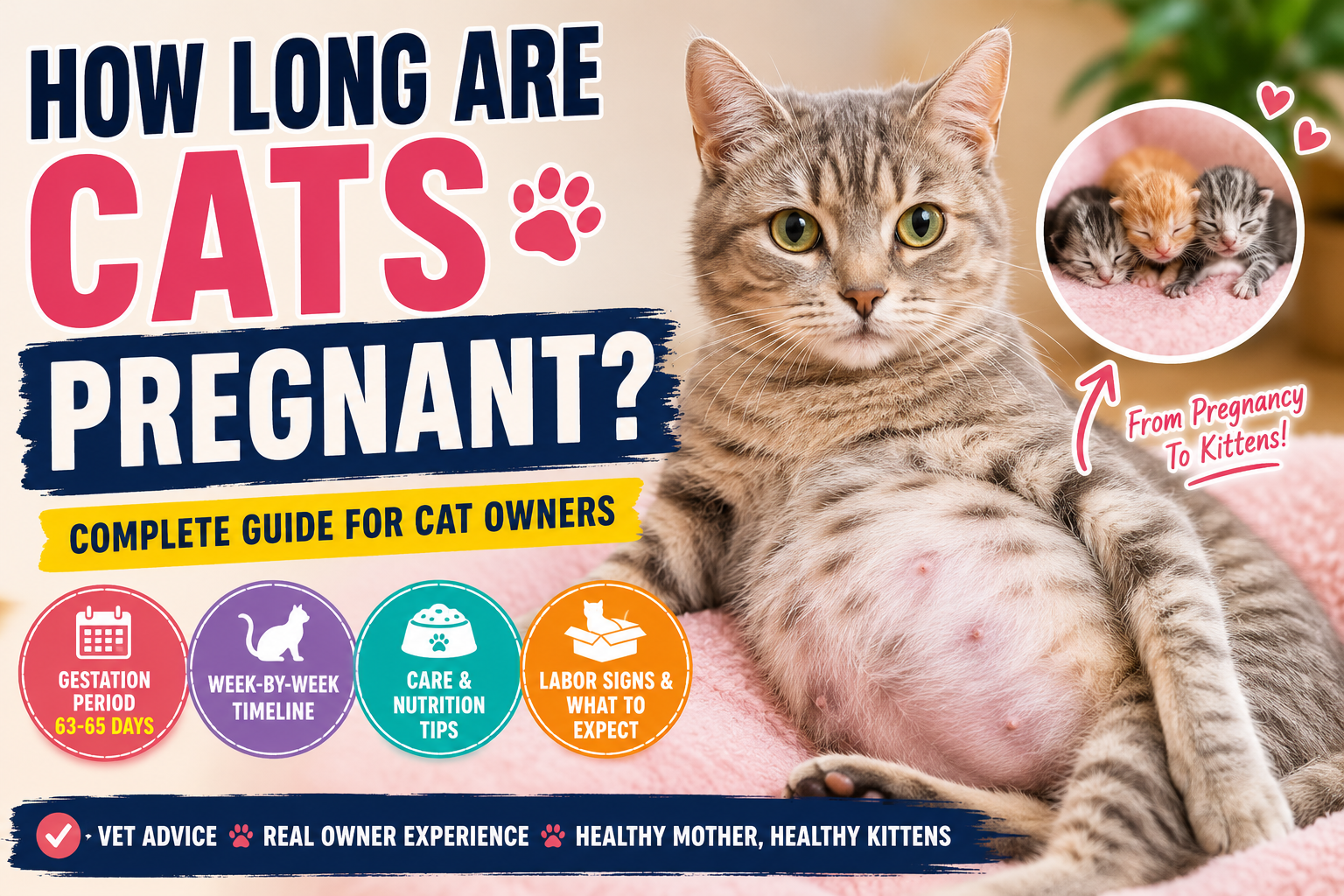
Wondering how long are cats pregnant? Most cat pregnancies last around 63 to 65 days, but several factors can affect the exact timeline. Understanding the feline gestation period, pregnancy stages, labor signs, and proper prenatal care helps ensure a healthy mother and kittens. This complete guide explains everything cat owners need to know, from conception to birth, with expert tips and real-life experiences.
How Long Are Cats Pregnant? Understanding the Average Gestation Period
The average cat pregnancy lasts between 63 and 65 days, although some queens may deliver healthy kittens anywhere from 58 to 72 days. Factors like breed, litter size, and overall health can influence the exact timeline. Knowing the normal gestation period helps owners prepare for labor and provide the best prenatal care possible.
During pregnancy, your cat will experience noticeable physical and behavioral changes. Increased appetite, weight gain, enlarged nipples, and nesting behavior usually appear as the pregnancy progresses. Monitoring these signs allows you to support your cat throughout every stage while ensuring both the mother and kittens remain healthy and comfortable.
Quick Facts 🐱
- 🐾 Average pregnancy lasts 63–65 days.
- 📅 Some cats deliver between 58–72 days.
- 🍼 Pregnant cats are called queens.
- 🍗 Appetite usually increases after three weeks.
- 🛏️ Nesting starts close to labor.
- ❤️ Regular health checks are important.
- 🐈 Litter size affects delivery timing.
- 🌡️ Keep stress levels low.
- 💧 Fresh water should always be available.
- 🏡 Prepare a quiet birthing area.
👨⚕️ Veterinary Advice: As a cat veterinarian, I recommend scheduling a health examination soon after pregnancy is suspected. Early veterinary care helps identify complications, confirms pregnancy, and ensures your queen receives proper nutrition and parasite prevention throughout gestation.
🐈 My Experience as a Cat Owner: When my cat became pregnant, I counted every day from the first breeding. Around day 60, she began searching for quiet places and became extra affectionate. Preparing her nesting box early made the delivery much calmer for both of us.
Week-by-Week Cat Pregnancy Timeline and Signs
During the first few weeks, pregnancy signs are subtle. By the third week, nipples become pinker, appetite increases, and gentle weight gain begins. Around week five, a veterinarian may confirm developing kittens. As labor approaches, your cat spends more time resting and preparing a comfortable nesting area.
The final week is often the most exciting for cat owners. The queen may lose interest in food temporarily, groom herself frequently, and become more vocal. Body temperature often drops slightly before labor begins. Understanding these pregnancy stages helps you recognize normal behavior and identify potential warning signs.
Pregnancy Timeline 🗓️
- 🌸 Week 1: Fertilization occurs.
- 💗 Week 3: Nipples become pink.
- 🍽️ Appetite increases gradually.
- ⚖️ Belly starts enlarging.
- 👶 Kittens grow rapidly by week 5.
- 🩺 Veterinary checkup is recommended.
- 🛌 Week 7: More resting time.
- 📦 Nesting behavior appears.
- 🌡️ Temperature drops before labor.
- 🐾 Delivery usually begins around day 63.
👨⚕️ Veterinary Advice: Never give medications to a pregnant cat without veterinary approval. Some common medicines can harm unborn kittens. If your queen stops eating for more than a day or shows unusual discharge, seek veterinary care immediately.
🐈 My Experience as a Cat Owner: My pregnant cat surprised me by sleeping much more during week seven. At first I worried, but after consulting my veterinarian, I learned this was perfectly normal. Watching her carefully each day gave me confidence before labor started.
Caring for a Pregnant Cat Until Delivery
Proper nutrition, hydration, and a stress-free environment are essential during feline pregnancy. High-quality kitten food provides additional calories and protein needed for healthy kitten development. Keeping your cat indoors reduces disease exposure and protects both the queen and her unborn litter from unnecessary risks.
Prepare a clean nesting box several weeks before the expected due date. Keep the area warm, quiet, and away from household activity. Most cats deliver naturally without assistance, but understanding signs of labor and having your veterinarian’s contact information ready provides peace of mind during the birthing process.
Care Tips 🐾
- 🍗 Feed premium kitten food.
- 💦 Provide fresh water daily.
- 🏡 Keep your cat indoors.
- 🧺 Prepare a nesting box.
- 🛏️ Reduce household stress.
- ❤️ Observe daily behavior.
- 🧼 Maintain a clean environment.
- 🚫 Avoid unnecessary medications.
- 📞 Keep your vet’s number handy.
- 🐱 Monitor labor carefully.
👨⚕️ Veterinary Advice: Most cats give birth without complications, but prolonged straining, heavy bleeding, or more than two hours between kittens requires immediate veterinary attention. Prompt medical care can save both the mother and her kittens.
🐈 My Experience as a Cat Owner: I placed a soft blanket inside a quiet cardboard box about two weeks before my cat’s due date. She explored it daily and eventually chose it for giving birth. Having everything prepared beforehand reduced stress for both of us and made the experience memorable.
How Long Are Cats Pregnant? Average Gestation Period Explained
Cats are typically pregnant for 63 to 65 days, although a healthy pregnancy can range from 58 to 72 days depending on the breed, litter size, genetics, and overall health. Understanding the feline gestation period helps pet owners prepare for labor, monitor kitten development, and provide proper prenatal care throughout pregnancy.
As pregnancy progresses, your queen will experience physical and behavioral changes, including weight gain, pink nipples, increased appetite, nesting behavior, and longer sleeping hours. Tracking these pregnancy symptoms allows you to recognize normal milestones while ensuring your cat receives balanced nutrition, a stress-free environment, and timely veterinary support.
🐾 Key Facts About Cat Pregnancy
- 🐱 Most cat pregnancies last 63–65 days.
- 📅 Healthy births may occur between 58–72 days.
- ❤️ Pregnant female cats are called queens.
- 🍽️ Appetite usually increases after week three.
- 🍼 Kittens develop rapidly during the final month.
- 🏡 Indoor cats have safer pregnancies.
- 🧺 Prepare a nesting box before labor.
- 💧 Fresh water should always be available.
- 🩺 Regular vet checkups are essential.
- 🌸 Every pregnancy is slightly different.
👨⚕️ Veterinary Advice: As a feline veterinarian, I recommend confirming pregnancy with your veterinarian around the third or fourth week. Early prenatal care helps detect health issues, monitor fetal development, and ensure your queen receives proper nutrition, parasite control, and vaccinations if needed before pregnancy.
🐈 My Experience as a Cat Owner: When my Persian cat became pregnant, I marked the breeding date on a calendar. Around day 60, she became quieter and started hiding in cozy places. Preparing a nesting box early helped her feel secure, and she delivered four healthy kittens without complications.
Week-by-Week Cat Pregnancy Timeline and Symptoms
During the first two weeks, pregnancy signs are difficult to notice because embryos are still developing. Around week three, nipples become pink, appetite increases, and gentle weight gain begins. By weeks five to seven, the abdomen enlarges noticeably as kittens grow quickly inside the uterus.
During the final week, your cat may become restless, groom herself more frequently, and search for quiet nesting areas. A slight drop in body temperature often occurs before labor begins. Recognizing these pregnancy stages helps owners distinguish normal behavior from symptoms requiring veterinary attention.
📅 Pregnancy Timeline
- 🌱 Week 1: Fertilization begins.
- 💕 Week 2: Embryos continue developing.
- 🌸 Week 3: Nipples become pink.
- 🍗 Appetite noticeably increases.
- ⚖️ Week 5: Belly becomes rounder.
- 👶 Kittens grow rapidly.
- 🛏️ Week 7: More sleeping time.
- 📦 Nesting behavior starts.
- 🌡️ Temperature drops before labor.
- 🐾 Delivery usually happens around day 63.
👨⚕️ Veterinary Advice: If your pregnant cat experiences bleeding, severe vomiting, persistent lethargy, loss of appetite lasting over 24 hours, or prolonged labor, contact your veterinarian immediately. Quick medical attention significantly improves the health and survival of both the queen and her kittens.
🐈 My Experience as a Cat Owner: My cat suddenly became extremely affectionate during week six and followed me everywhere. Initially, I thought something was wrong, but my veterinarian explained that hormonal changes often make pregnant cats seek extra comfort and reassurance from their trusted owners.
How to Care for a Pregnant Cat Before Giving Birth
Proper care during feline pregnancy includes feeding a high-quality kitten formula, providing unlimited access to clean water, minimizing household stress, and creating a warm nesting space. Nutrient-rich food supplies the extra calories, protein, calcium, and vitamins required for healthy kitten growth and maternal health.
Avoid unnecessary medications, strenuous activity, and exposure to unfamiliar animals throughout pregnancy. Observe your queen daily for behavioral changes and signs of approaching labor. Being prepared with a clean birthing area and your veterinarian’s emergency contact ensures a safer, smoother kitten delivery experience.
🏡 Pregnancy Care Tips
- 🍖 Feed high-quality kitten food.
- 💦 Keep fresh water available.
- 🧺 Prepare a quiet nesting box.
- 🏠 Keep your cat indoors.
- 🧼 Maintain a clean environment.
- ❤️ Reduce stress whenever possible.
- 🩺 Schedule prenatal veterinary visits.
- 🚫 Never give medicines without approval.
- 📞 Save your veterinarian’s emergency number.
- 🐱 Monitor labor carefully.
👨⚕️ Veterinary Advice: Most healthy queens give birth naturally without assistance. However, if strong contractions continue for more than 30 minutes without producing a kitten, or if more than two hours pass between kittens, seek emergency veterinary care immediately.
🐈 My Experience as a Cat Owner: Before my cat’s due date, I placed soft towels inside a quiet cardboard box in a spare room. She explored it for several days before choosing it for delivery. Because everything was prepared in advance, the birthing process remained calm, organized, and stress-free for everyone.
How Long Are Cats Pregnant? Average Gestation Period
Cats are usually pregnant for 63 to 65 days, though a healthy feline pregnancy can last anywhere from 58 to 72 days. The exact gestation period depends on breed, genetics, litter size, and overall health. Understanding the normal pregnancy timeline helps owners prepare for kitten birth and monitor their queen’s health carefully.
During pregnancy, your cat undergoes several physical and hormonal changes. Weight gain, enlarged pink nipples, increased appetite, nesting instincts, and reduced activity are common signs. Learning these pregnancy symptoms helps you provide excellent prenatal care, improve kitten survival, and recognize when veterinary attention may become necessary.
🐾 Quick Facts
- 🐱 Average pregnancy lasts 63–65 days.
- 📅 Healthy births occur between 58–72 days.
- ❤️ Female pregnant cats are called queens.
- 🍗 Appetite increases after week three.
- 🍼 Kittens develop quickly in later weeks.
- 🏡 Indoor cats stay safer during pregnancy.
- 💧 Fresh water is essential daily.
- 🛏️ Rest is very important.
- 🩺 Regular veterinary visits improve outcomes.
- 🧺 Prepare a nesting box early.
👨⚕️ Veterinary Advice: As a cat veterinarian, I recommend confirming pregnancy around the third week using ultrasound or palpation. Early diagnosis allows better nutritional planning, parasite management, and monitoring for pregnancy complications, ensuring healthier kittens and a healthier mother.
🐈 My Experience as a Cat Owner: My first pregnant cat became noticeably calmer after one month. She loved sleeping in quiet corners and demanded extra food. Tracking her pregnancy week by week helped me prepare everything before labor started, making the entire experience smooth and rewarding.
Week-by-Week Cat Pregnancy Timeline
The first three weeks of cat pregnancy often show very few visible changes. Around day twenty-one, nipples become pink, appetite improves, and the queen starts gaining weight. By week five, the abdomen becomes rounder as kittens continue developing rapidly inside the uterus.
During weeks seven to nine, your cat may sleep longer, groom herself frequently, and begin searching for quiet places. Nesting behavior, reduced appetite before labor, and a slight drop in body temperature are normal signs indicating that kitten delivery is approaching very soon.
📅 Pregnancy Timeline
- 🌱 Week 1: Fertilization begins.
- 💕 Week 2: Embryos continue growing.
- 🌸 Week 3: Pink nipples appear.
- 🍽️ Appetite increases naturally.
- ⚖️ Week 5: Belly becomes larger.
- 👶 Kittens develop rapidly.
- 🛏️ Week 7: Sleeping increases.
- 📦 Nesting behavior starts.
- 🌡️ Temperature drops before labor.
- 🐾 Birth usually occurs near day 63.
👨⚕️ Veterinary Advice: Monitor your queen’s eating habits, hydration, and behavior every day. Contact your veterinarian immediately if you notice bleeding, abnormal discharge, severe lethargy, or continuous vomiting because these symptoms could indicate pregnancy complications requiring urgent medical attention.
🐈 My Experience as a Cat Owner: Around week seven, my cat stopped jumping onto high furniture and preferred staying close to her nesting area. Seeing these natural changes reminded me how important it was to create a peaceful environment before the kittens arrived.
How to Care for a Pregnant Cat Properly
Proper nutrition plays a major role throughout feline pregnancy. Feed high-quality kitten food rich in protein, calcium, healthy fats, vitamins, and minerals. These nutrients support fetal development, strengthen the mother’s immune system, and prepare her body for successful nursing after kitten delivery.
Create a warm, quiet, and stress-free environment where your pregnant cat feels secure. Limit unnecessary handling, avoid introducing new pets, and provide a comfortable nesting box several weeks before the expected due date. Good prenatal care greatly improves pregnancy outcomes for both mother and kittens.
🏡 Pregnancy Care Tips
- 🍗 Feed premium kitten food.
- 💦 Provide fresh water daily.
- 🏠 Keep your cat indoors.
- 🧺 Prepare a nesting area.
- ❤️ Reduce household stress.
- 🩺 Schedule veterinary checkups.
- 🧼 Maintain a clean environment.
- 🚫 Avoid unnecessary medications.
- 🐱 Watch daily behavior carefully.
- 📞 Keep emergency veterinary contact ready.
👨⚕️ Veterinary Advice: Never give human medications or supplements to a pregnant cat without professional guidance. Some medications are toxic to developing kittens and may cause birth defects or miscarriage. Always consult your veterinarian before treating any health condition.
🐈 My Experience as a Cat Owner: I switched my cat to premium kitten food during pregnancy after my veterinarian’s recommendation. Within two weeks, she looked healthier, became more energetic, and maintained an ideal body condition throughout the remaining weeks until delivery.
Signs That Labor Is Near and What to Expect
As labor approaches, your pregnant cat may become restless, stop eating temporarily, and repeatedly visit her nesting area. Frequent grooming, pacing, vocalizing, and hiding are common behaviors. Understanding these labor signs helps you remain calm and recognize when normal delivery is beginning.
Most healthy cats deliver kittens naturally without assistance. However, prolonged straining, excessive bleeding, or long gaps between kittens require immediate veterinary care. Preparing emergency supplies, clean towels, and your veterinarian’s phone number ensures you can respond quickly if unexpected complications occur.
🐾 Labor Preparation Checklist
- 🧺 Prepare a clean nesting box.
- 🛏️ Keep the room quiet.
- 🌡️ Watch body temperature.
- 🐱 Observe labor signs calmly.
- 💧 Keep fresh water nearby.
- 🧼 Use clean towels.
- 📞 Save your veterinarian’s number.
- 🚗 Plan emergency transportation.
- ❤️ Avoid disturbing the mother.
- 👶 Let kittens nurse immediately.
👨⚕️ Veterinary Advice: If your queen strains continuously for over thirty minutes without producing a kitten, or more than two hours pass between kittens, seek emergency veterinary assistance immediately. Prompt treatment can save both the mother and her newborn kittens.
🐈 My Experience as a Cat Owner: My cat chose the nesting box I had prepared two weeks before her due date. She delivered five healthy kittens overnight with very little assistance. Staying nearby while giving her privacy helped both of us feel calm throughout the birth process.
Conclusion
Knowing how long cats are pregnant helps you prepare for every stage of your cat’s journey to motherhood. By providing proper nutrition, regular veterinary care, a stress-free environment, and a comfortable nesting area, you can support a healthy pregnancy and safe delivery. With patience, observation, and expert guidance, you’ll be ready to welcome healthy, happy kittens into your home with confidence.